Benjamin Bloom
What Christian Eriksen will offer Brentford
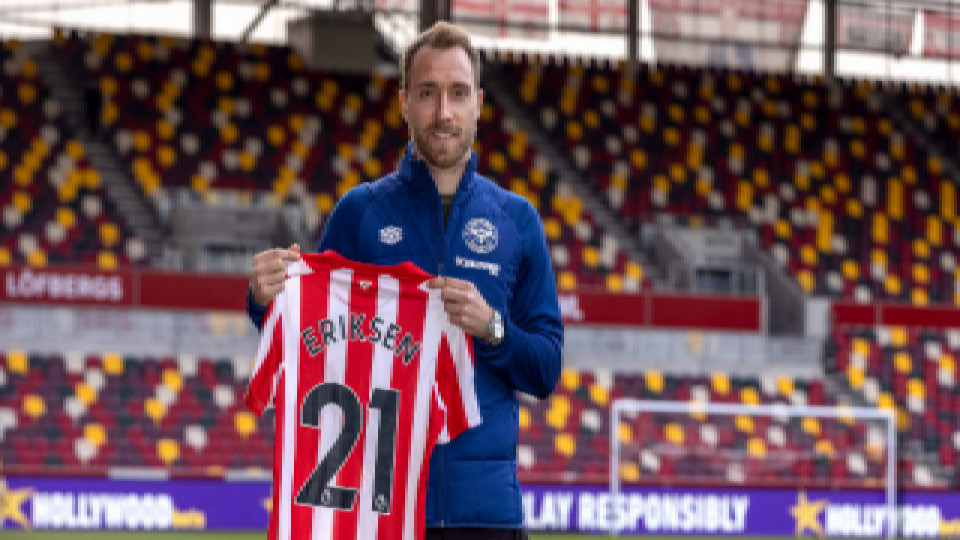
Brentford have signed former Tottenham midfielder Christian Eriksen, but what sort of output can the Bees expect? Here's what the stats say.
The transfer of Christian Eriksen to Brentford is a massive good news story.
I remember being out and about and seeing people gathered around a TV when Eriksen collapsed during Denmark’s game with Finland in the Euros, and the overriding sense of dread when seeing a fellow human being in such awful peril was an awful sensation for the onlookers.
Monday morning’s announcement on the Brentford Twitter was the comeback that each and every person glued to the horrible footage in June probably thought would never happen. But Eriksen’s contract with Inter was mutually terminated back in December, and all of a sudden Brentford started to look like a realistic possibility for a fairytale return.
The Bees are pretty much the perfect solution for Eriksen, offering him a return to London having previously been at Tottenham.
The Dane was a prolific appearance maker for Spurs, starting 86% of games in his six full seasons, and he certainly shouldn't struggle to fit in with his new team-mates: Brentford have strong Danish links and could now put out a side containing eight Danes, managed by another in Thomas Frank. But we all know football, and once the good news angle has been processed there will be just one question surrounding Eriksen’s return: can he get anywhere near the level he reached prior to his health issues?
Anyone who watched Eriksen at Spurs knows that level was very high. From his arrival in 2013-14, the seasonal goal contributions tally in the Premier League reads 15, 12, 19, 23, 20, 20, before dropping down to four in his last half-season before the move to Inter. His 113 goal contributions in his six and a half seasons average out at more than 17 per campaign.
Even in the presence of Harry Kane, we don’t have to look too far for a metric dominated by Eriksen. In each of his full seasons at Spurs, he was number one for key passes, peaking at 3.3 per game in 2015-16. By way of comparison, Trent Alexander-Arnold leads the way with 2.9 so far this season. In all bar one of his seasons Eriksen topped the assist charts at Tottenham, though the likes of Mesut Ozil, Kevin De Bruyne and Eden Hazard topped the full Premier League ranking.
So how will this translate at Brentford? We’re very much in the realms of the unknown here. The argument against is obvious: Eriksen is no longer the 21-year-old who arrived in the Premier League and started 196 times in the following six seasons, and then there’s the impact of what happened in the Euros on his fitness and psychological outlook.
The argument for says he’s only 29 and that his brilliant football brain and superlative set play execution could override any drop off in physicality. The combined average age of Mo Salah, Kevin De Bruyne and Harry Kane is, you guessed it, 29.
During his peak years at Spurs, Eriksen played inside right in a 4-2-3-1 and spent his time servicing a prolific number nine in Kane and a number ten often ending up as a second striker in Dele Alli. Brentford in contrast seem wedded to a back three, so if they want to get Eriksen into that strategy it seems like there are two options. Firstly, they could lose a central midfielder, move Bryan Mbeumo across to the left and utilise a more 3-4-3 looking shape. Mbuemo can operate wide but preferred to do it from the right-hand side when he registered 23 Championship goal contributions in the glorious front three he formed with Said Benrahma and Ollie Watkins.
Secondly, they could deploy Eriksen in a midfield three either slightly to the right or as a number ten, but whether that would leave them undermanned defensively in the middle remains to be seen.
You’ll notice the only prolific striker I’ve mentioned so far in the piece is Kane. Brentford, of course, have the excellent Ivan Toney up front, who fired in an absurd 43 goal contributions across the Championship and play-offs during the Bees' promotion last season. Toney has six goals so far this season and Kane five. The Bees striker is also currently taking seven minutes less to score a goal than the England captain. It will be what it will be, but the best-case scenario sounds pretty fun and would complete a truly sensational footballing comeback.